
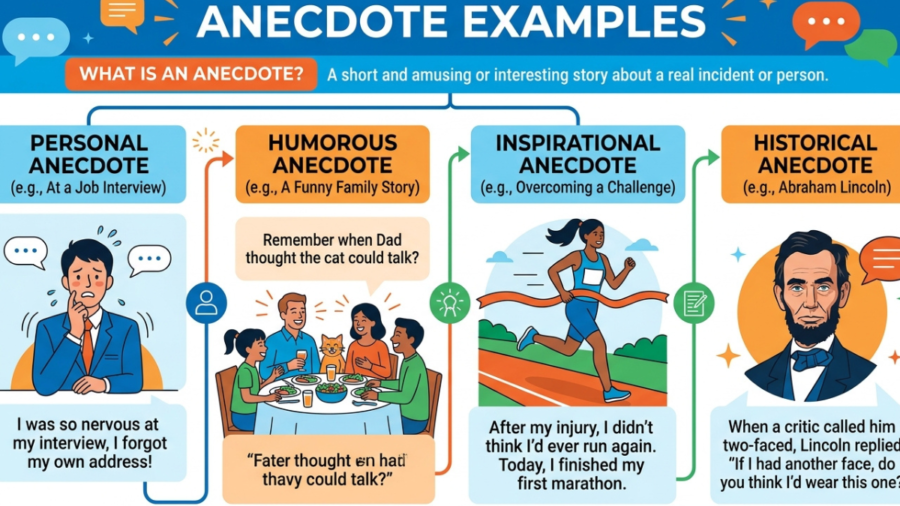
A good story does not always need many pages to make an impression. Sometimes, a short account of a memorable moment can communicate an idea, create an emotion, or make a conversation more engaging. That is where an anecdote can be useful.
Anecdote Examples can help writers understand how a brief experience can support a larger point. Anecdotes are often connected with personal experiences, humorous moments, memorable events, or observations. Public speakers, for example, may use humorous anecdotes when beginning a talk.
What Is an Anecdote Examples?
Anecdote Examples is a short account or narrative about an event or experience. Unlike a long fictional story, an anecdote usually focuses on one particular moment rather than developing a large plot.
An anecdote can be based on something that happened to the speaker or writer, an observation, or a memorable incident. The important point is that the account usually has a reason for being told. It may illustrate an idea, add humor, provide context, or help an audience connect with a subject.
Simple Definition of an Anecdote Examples
A simple way to understand an anecdote is to think of it as a brief story about a particular event or experience. For example, imagine a student explaining why preparation matters. Instead of simply saying, “Preparation is important,” the student might briefly describe arriving at school for an important presentation and realizing that the presentation file was still at home.
Key Characteristics of an Anecdote Examples
Anecdote Examples are generally brief and focused. They normally concentrate on a specific event instead of attempting to tell an entire life story. A useful anecdote usually has a clear subject, a recognizable situation, and some reason for being included. It may be amusing, emotional, informative, or simply memorable.
Anecdote vs. Story: What Is the Difference?
The terms can overlap, but an anecdote and a short story are not necessarily the same thing. An anecdote is typically a brief account of an event or experience. A short story, by contrast, is a literary form that is generally fictional and shorter than a novel. Cambridge defines a short story as an invented written story that is shorter than a novel.
What Is an Anecdote Examples?
Anecdote Examples is simply an illustration of how a brief event can be presented as an anecdote. For example, a writer discussing the importance of patience might describe waiting for a delayed bus during a rainy morning and realizing that becoming frustrated would not make the bus arrive faster. The event is small, but it can support a larger discussion about patience.
Simple Anecdote Example
Imagine a teacher explaining the importance of checking work before submitting it. A student completes an assignment quickly and submits it without proofreading. Later, the student notices that a simple spelling mistake changed the meaning of an important sentence.
Personal Anecdote Example
Personal anecdotes are based on experiences connected with the person telling the story. For example, someone writing about learning to cook might describe preparing their first meal independently. They could explain how they followed a recipe, misunderstood one instruction, and ended up with a meal that looked very different from the picture.
Funny Anecdote Example
Humor is another common use of anecdotes. Cambridge specifically notes that public speakers may begin talks with humorous anecdotes. For example, someone giving a presentation about technology might describe confidently trying to fix a computer problem and accidentally turning the screen brightness all the way down instead.
Inspirational Anecdote Example
An inspirational anecdote can describe a small event that demonstrates persistence, kindness, courage, or another positive quality. For example, a student might describe struggling with a difficult subject but continuing to practice a little each evening. Eventually, the student becomes more confident and performs better.
Why Are Anecdote Examples Important in Writing?
Anecdotes can give abstract ideas a concrete human context. Instead of discussing an idea only through explanations, a writer can show how that idea appears in an actual or illustrative situation. This can be especially helpful when the subject is difficult, technical, or emotionally distant.
Making Content More Interesting
A paragraph filled entirely with general statements can become difficult to follow. A short anecdote can provide a change of pace. For example, a blog post about workplace communication could begin with a brief incident involving a misunderstood email. The example gives readers a situation they can imagine before the article moves into broader advice.
Creating an Emotional Connection
People often understand ideas more easily when those ideas are connected to recognizable experiences. A short story about disappointment, excitement, embarrassment, success, or kindness can give an otherwise abstract topic a human dimension. This does not mean every anecdote needs to be dramatic.
Supporting a Main Idea
One of the most useful functions of an anecdote is supporting the main point. Suppose an article argues that preparation reduces stress. A short account of someone preparing their materials the night before an important presentation can illustrate the argument.
Where Can You Use an Anecdote?
Anecdotes can appear in many forms of communication. Their usefulness depends on the purpose of the writing or speech and the audience receiving it.
Anecdotes in Essays
Students can use anecdotes to introduce a topic or provide context for an argument. For example, an essay about the importance of reading could begin with a brief memory of discovering a favorite book at school. The writer can then transition from that experience into the broader subject.
Anecdotes in Speeches
Speakers frequently use short stories or anecdotes to introduce subjects and establish a connection with an audience. Cambridge gives humorous anecdotes as an example of what public speakers may use at the beginning of talks.
A speaker discussing leadership, for instance, could describe a memorable moment involving teamwork before introducing the main topic. A strong speech anecdote should be easy to follow when heard aloud. Unnecessary details can make it harder for an audience to understand the point.
Anecdotes in Blog Posts
Blog writers can use anecdotes to create a more natural introduction or explain an idea through an everyday situation. For example, a productivity article could begin with a brief account of someone opening their laptop to complete one task and then spending an hour responding to unrelated notifications.
Anecdotes in Everyday Conversations
Anecdotes are not limited to formal writing. People use short personal stories in ordinary conversations all the time. Someone might describe a funny experience at work, an unexpected event during a trip, or a memorable conversation with a friend. In everyday communication, anecdotes often help people share experiences and make conversations more personal.
Different Types of Anecdote Examples
There is no single fixed category system for every anecdote. However, writers commonly encounter several broad forms based on subject and purpose.
Personal Anecdotes
A personal anecdote describes an experience involving the person telling the story. It might involve school, work, family, travel, hobbies, or an ordinary day. The experience does not have to be extraordinary. What matters is that it illustrates something worth sharing.
Humorous Anecdotes
Humorous anecdotes are short accounts intended to entertain or add lightness to a discussion. They often involve an unexpected situation, misunderstanding, mistake, or amusing observation. Humor works best when it feels natural and does not distract from the subject.
Historical Anecdotes
Historical anecdotes are brief accounts associated with people or events from the past. Writers should be especially careful with these because an anecdote presented as a historical fact needs reliable evidence. If the origin or accuracy of a historical story is uncertain, it should not be presented as established fact.
Inspirational Anecdotes
Inspirational anecdotes highlight experiences that can illustrate qualities such as perseverance, generosity, courage, or determination. The best examples remain realistic and relevant. An inspirational anecdote does not need to promise that success is guaranteed; it can simply demonstrate a useful lesson from a particular experience.
How to Write a Good Anecdote Examples
Writing an effective anecdote is less about making an event sound dramatic and more about choosing the right moment and presenting it clearly.
Choose a Relevant Experience
Begin with an event that connects directly to your topic. If your article is about teamwork, choose an experience involving cooperation or a problem that required people to work together. Avoid selecting a story merely because it is interesting if it does not support your main subject.
Start With an Interesting Moment
An anecdote does not need a long introduction. Instead of explaining every detail that happened before the event, move quickly toward the moment that matters. For example, rather than spending several sentences describing an entire school day, you could begin with the moment a student realized they had prepared for the wrong presentation.
Add Specific Details
Specific details can help readers understand the situation. You might mention the setting, what happened, what someone said, or how the person responded. However, details should serve the story rather than simply increase its length.
Keep the Story Short and Focused
An anecdote should not become a complete biography or lengthy narrative. If a detail does not help explain the event or support the main idea, consider removing it. Keeping the story focused also makes it easier for readers and listeners to understand why the anecdote was included.
End With a Clear Point
A strong ending helps connect the experience to the subject. After the event, explain the lesson, observation, or idea that the anecdote demonstrates. Sometimes the point can be stated directly; in other cases, the context makes it obvious. The important thing is that readers should not have to wonder why they were told the story.
Anecdote Examples for Different Situations
Looking at Anecdote Examples from different everyday situations can make the concept easier to understand.
Anecdote Example About School
A student studies for an exam but spends most of the time rereading notes without testing their understanding. During the exam, the student realizes that recognizing information is different from remembering it independently. This anecdote can introduce a discussion about effective study methods.
Anecdote Example About Family
A family plans a large meal together. Everyone assumes someone else has purchased an important ingredient. When cooking begins, they discover that nobody bought it. The situation can provide a light example of why clear communication matters.
Anecdote Example About Work
An employee receives a short message from a colleague and interprets it as criticism. Later, they discover that the colleague simply wanted clarification. This brief incident can introduce a discussion about how written communication can sometimes be misunderstood.
Anecdote Example About Travel
A traveler carefully plans a day around several attractions but discovers that unexpected weather has changed the schedule. Instead of allowing the entire day to become frustrating, the traveler chooses an indoor activity and later finds that the change creates one of the most enjoyable memories of the trip.
Anecdote Example About Friendship
Two friends arrange to meet at a café but accidentally wait at different locations with similar names. After several confused messages, they finally find each other and laugh about the mistake. The short incident can illustrate how small misunderstandings can become memorable experiences.
Common Mistakes to Avoid When Writing an Anecdote
Anecdotes can be effective, but they can also weaken writing when they are poorly chosen or unnecessarily long.
Making the Anecdote Too Long
A long story can distract from the main topic. If readers have to move through several paragraphs before discovering why the story matters, the anecdote may need to be shortened. Keep the focus on the most useful part of the experience.
Adding Unnecessary Details
Not every detail deserves space. The exact color of a person’s shoes, the complete weather forecast, or a long description of a location may not matter unless it affects the story. Choose details that help readers understand the event.
Forgetting the Main Message
An anecdote should have a purpose. If the story is funny but has no connection with the article, it can make the content feel unfocused. Always ask yourself what the anecdote is helping the reader understand.
Using an Anecdote That Does Not Fit the Topic
A story should match the subject, audience, and tone. For example, a highly humorous anecdote may not be appropriate for every serious topic. Similarly, an emotional personal story may not fit an article that requires a strictly factual presentation.
Tips for Making an Anecdote Examples More Interesting
Anecdotes do not need complicated writing. Clear storytelling and careful selection are usually more useful than exaggerated language.
Use Descriptive Details
Include a few details that help readers picture the moment. Instead of saying someone was nervous, you could describe their hands shaking before they began speaking. The detail gives the reader a clearer sense of the situation. Use details selectively so the anecdote remains concise.
Show Emotions Naturally
People react emotionally to events, and those reactions can make an anecdote feel more relatable. Rather than repeatedly telling readers that someone was embarrassed, describe what the person did when the embarrassing moment happened. Natural emotional details can make a short account feel more personal.
Create a Strong Opening
The first sentence can establish the situation quickly. A question, surprising moment, or immediate action can make an anecdote more inviting. The opening should still accurately represent what follows rather than using exaggerated clickbait.
Make the Ending Memorable
A memorable ending can be as simple as a clear observation or lesson. For example, after describing a mistake caused by poor preparation, the writer might conclude by explaining how that experience changed their approach to future tasks. The ending should bring the reader back to the reason the anecdote was included.
Anecdote Examples vs. Other Types of Writing
Understanding the differences between related forms can help writers choose the right structure.
Anecdote vs. Short Story
Anecdotes and short stories can both contain characters, events, and narrative elements, but their purposes can differ. An anecdote generally presents a brief account of a particular incident. A short story is a literary form and is generally an invented story shorter than a novel.
Anecdote vs. Personal Narrative
A personal narrative generally focuses on recounting an experience from the writer’s perspective. An anecdote can also be personal, but it is usually shorter and more focused on a particular incident or point. For example, a detailed account of an entire school year could be a personal narrative, while a brief account of one memorable classroom incident could function as an anecdote.
Anecdote vs. Essay
An essay is a broader form of writing that develops ideas, arguments, explanations, or reflections. An anecdote is much narrower. It can actually be included within an essay to introduce an idea, provide context, or illustrate a point. In other words, an anecdote can be part of an essay, but an essay is not simply an extended anecdote.
Conclusion
An anecdotes can make writing more engaging by turning a general idea into a relatable experience. A well-chosen anecdote example can add personality, explain a point, and help readers connect with the topic. Whether you are writing an essay, speech, blog post, or simply sharing a memorable experience, keeping the story short and focused is important.
When creating your own anecdote, choose a relevant experience, start with an interesting moment, include meaningful details, and finish with a clear point.
FAQs
1. What Is an Anecdote Examples?
An anecdote example is a short account of a specific event or experience used to illustrate an idea, share a lesson, or entertain readers.
2. What Are Some Common Anecdote Examples?
Common anecdote examples include personal experiences, funny incidents, school memories, workplace moments, travel experiences, and inspirational events.
3. How Long Should an Anecdote Be?
Most Anecdote Examples are brief and focused, containing enough detail to explain the event without becoming a lengthy story.
4. Can Anecdote Examples Be Used in Essays?
Yes, Anecdote Examples can introduce an essay topic, provide context, or illustrate a main argument when the story is relevant to the subject.
5. What Makes Anecdote Examples Effective?
Effective Anecdote Examples are relevant, clear, engaging, and focused on a specific moment with a meaningful point or takeaway.