

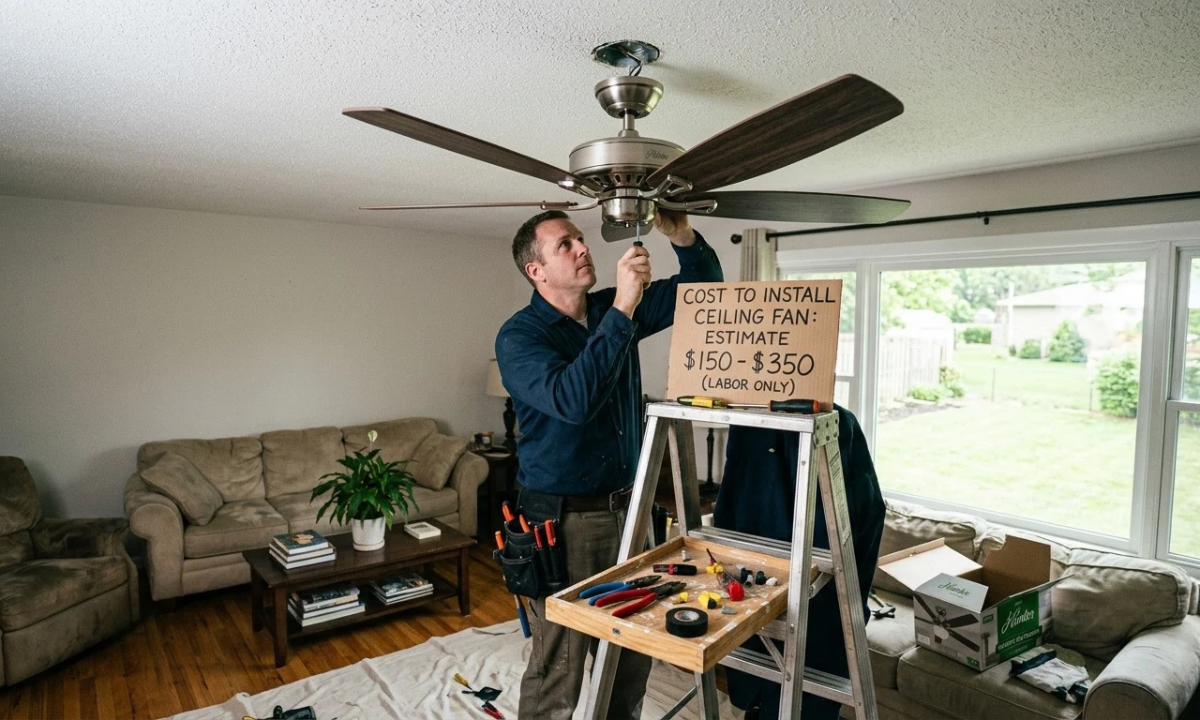
Installing a ceiling fan can be a practical way to improve airflow, increase comfort, and update the appearance of a room. However, before buying a new fan, it is important to understand the complete installation expense. The price of the fan is only one part of the budget. Labor, wiring, mounting hardware, ceiling height, and optional features can all affect the final cost.
The Cost to Install Ceiling Fan varies depending on whether you are replacing an existing unit or installing a fan in a location without suitable wiring. A straightforward replacement may require relatively little additional work, while a new installation can involve electrical modifications and specialized mounting equipment.
What Is the Average Cost to Install Ceiling Fan Fan?
The average Cost to Install Ceiling Fan depends on the fan model, labor requirements, and condition of the existing electrical system. According to Angi’s 2026 cost guide, professional installation averages approximately $253 in the United States, with many projects costing between $146 and $360.
These figures provide a starting point rather than a guaranteed price. Installing a fan where suitable wiring already exists can be less expensive than creating a new electrical connection. Higher ceilings, specialty fans, and additional electrical work can increase the total.
Average Ceiling Fan Installation Prices
For a preliminary budget, HomeGuide’s ceiling fan installation guide estimates that replacing an existing fan typically costs 150–500, including the fan and labor. Installing a new fan with new wiring can cost approximately 400–1,000, including the fan, wiring, and labor.
| Project type | Estimated total cost |
| Replace an existing ceiling fan | 150–500 |
| Install a new fan with new wiring | 400–1,000 |
These estimates represent different types of projects, so they should not be treated as fixed quotes. Local labor rates, the selected fan, and the amount of electrical work can change the final price.
Ceiling Fan Cost vs. Installation Labor Cost
The total Cost to Install Ceiling Fan includes the fan itself, installation labor, mounting materials, and any required electrical modifications. Some projects also involve removing an old fixture, repairing access openings, or obtaining permits where required.
For example, imagine a homeowner chooses a fan priced at $180 and receives a labor quote of $150. If the installer also charges $40 for mounting materials and $30 for old-fan removal, the illustrative total would be $400.
Typical Installation Costs for Different Ceiling Fan Types
Ceiling fans are available in several designs, and each has different purchase and installation considerations. A standard indoor model may be sufficient for a bedroom, while a fan for a large living area or outdoor space may require different specifications.
- Standard ceiling fans: Usually offer straightforward controls and are suitable for many bedrooms and living rooms.
- Low-profile fans: Sit closer to the ceiling and can be appropriate for rooms with limited overhead clearance.
- Ceiling fans with lights: Combine air circulation and illumination in one fixture.
- Smart ceiling fans: May include app-based controls, scheduling, or smart-home integration.
- Outdoor-rated ceiling fans: Are designed for specific damp or wet environments, depending on their product rating.
- Large or specialty fans: May require additional mounting considerations or more installation time.
HomeGuide’s published cost breakdown provides fan-only estimates ranging from approximately $50 for basic models to $500 or more for some high-end designs. These prices exclude installation labor and can change with the model and retailer.
What Factors Affect the Cost to Install Ceiling Fan?
Several factors influence the total installation bill. Understanding them before requesting quotes helps you identify necessary expenses and avoid paying for features or modifications you do not need.
Ceiling Fan Type, Size, and Features
The fan’s size, motor, design, lighting, and controls affect its purchase price. A basic model may suit a small room, while a larger space may require a fan designed to move more air. The ceiling’s height and shape also influence the appropriate mounting arrangement. A low-profile fan may work well in a room with a low ceiling, while a high or sloped ceiling may require compatible mounting hardware.
Additional features can increase the upfront price. Remote controls, integrated lights, smart connectivity, and decorative finishes may be worthwhile, but only if they serve a practical purpose for your household.
Existing Wiring and Electrical Connections
Existing wiring can simplify Cost to Install Ceiling Fan when it is suitable for the new fan and meets applicable requirements. Replacing a fan in the same location may require less work than installing a fixture in a room without an existing electrical connection. A new installation may require cable routing, a suitable electrical box, a wall switch, or other electrical changes. The amount of work depends on the home’s layout and the condition of the existing system.
Ceiling Height and Installation Difficulty
Ceiling height affects how easily an installer can reach the mounting location. A standard-height ceiling is often simpler to work on than a vaulted ceiling or a room with difficult access. Higher ceilings may require specialized access equipment, additional labor, or a longer downrod. Sloped ceilings can also require compatible mounting components.
Mounting Brackets and Electrical Box Requirements
A ceiling fan must be securely attached to a support designed for its weight and movement. An ordinary light-fixture box may not provide the necessary support. Cost to Install Ceiling Fan guidance recommends an appropriately rated electrical box marked for ceiling-fan use. The fan may also need to be anchored to a ceiling joist or installed with a suitable mounting bracket.
Ceiling Fan Installation Labor Costs
Labor is an important part of the total budget. The final charge depends on the installer’s rates, the complexity of the work, and whether the job requires electrical modifications.
Electrician and Professional Installation Fees
Some installers charge a fixed amount for a straightforward replacement, while others use hourly rates for complicated projects. The quote may include assembling the fan, mounting it, connecting the wiring, testing its operation, and cleaning up the work area. Additional charges may apply for difficult access, new wiring, special mounting hardware, or work outside the original scope.
Labor Cost for Replacing an Existing Ceiling Fan
Replacing an existing fan can be less expensive when the electrical connections and mounting support are already suitable. The installer may be able to use the existing location without making major changes. However, replacement does not automatically mean the job will be simple. A heavier fan, different mounting design, incompatible controls, or unsuitable electrical box may require additional work.
Cost of Installing a Ceiling Fan Without Existing Wiring
Cost to Install Ceiling Fan in a new location can be significantly more expensive than replacing an existing unit. The electrician may need to route new cable, install a suitable electrical box, add a wall switch, or assess whether the existing circuit can support the fixture. The difficulty of accessing the ceiling and walls can also affect labor. For example, a room with limited access to the ceiling cavity may require more work than one with convenient access.
Additional Expenses to Include in Your Budget
The purchase price and labor charge do not always represent the entire project cost. Accessories, electrical changes, removal fees, and other expenses may increase the final amount.
New Wiring and Electrical Box Installation
A new electrical connection may be necessary when installing a fan where no suitable fixture connection exists. The installer may also need to replace an unsuitable electrical box or improve the mounting support. The amount of work depends on the building’s structure and existing electrical system. Ask the contractor to explain why each modification is needed and separate required safety work from optional upgrades.
Downrods, Mounting Hardware, and Special Equipment
Some ceiling fans require additional components to fit the ceiling correctly. These may include a downrod, a sloped-ceiling adapter, or a compatible mounting bracket. Tall ceilings may also require specialized access equipment or additional labor. Check the manufacturer’s instructions before buying accessories separately, as some models include the necessary mounting parts.
Remote Controls, Light Kits, and Smart Features
Remote controls, integrated lighting, dimming functions, and smart-home connectivity can increase the initial purchase price. Certain models may also require additional setup or compatible controls. Consider which features you will actually use. If your priority is simple air circulation, a standard fan may meet your needs without the expense of advanced controls.
If you want a smart fan, check compatibility with your existing switches and home automation system. Confirm the total price of the fan and any required accessories before making a decision.
Old Fan Removal and Disposal Fees
Removing an old fan may be included in the installation quote, but some contractors charge separately for removal or disposal. Ask about these services before accepting the estimate. If the old unit still works, you may be able to reuse, donate, or recycle it where appropriate facilities accept it. Check local disposal guidelines before discarding electrical equipment.
Confirming the removal arrangements in advance makes the project easier to manage and prevents unexpected charges on the final invoice.
DIY vs. Professional Ceiling Fan Installation
DIY installation may appear cheaper because it can eliminate some labor charges. However, the right decision depends on your experience, the condition of the electrical system, and the complexity of the mounting work.
How Much Can You Save With DIY Installation?
The potential savings from DIY installation come primarily from avoiding professional labor charges. However, you must also consider tools, mounting materials, time, and any work that still requires an electrician. Do not assume that the entire professional quote represents money you can save. A project involving new wiring, ceiling reinforcement, or difficult access may require professional assistance even if you handle other tasks yourself.
Benefits of Hiring a Professional Electrician
A qualified electrician can inspect the wiring, verify the mounting support, and identify potential problems before the fan is installed. Professional help is particularly valuable when the project involves new wiring or changes to the existing electrical system.
When comparing contractors, check their relevant qualifications, licensing where required, insurance, and experience with similar installations. Ask what work is included in the quote and whether the contractor provides a written warranty for the installation.
Electrical Safety and Installation Requirements
Electrical and mounting work must be completed according to the manufacturer’s instructions and applicable local requirements. The power must be safely isolated before work begins, and anyone carrying out electrical work must understand the correct safety procedures. Never mount a ceiling fan to a support that has not been confirmed as suitable. Improvised connections and unsuitable mounting hardware can create serious hazards.
If you are unsure whether the wiring, box, or ceiling structure is appropriate, stop and consult a qualified professional. Saving money should never come at the expense of safe installation.
How to Budget for Cost to Install Ceiling Fan
A realistic budget should include the fan, labor, necessary materials, and potential additional charges. Planning these categories separately makes it easier to compare options and control spending.
Set a Realistic Installation Budget
Start by identifying the room, the fan type, and whether the project is a replacement or a new installation. Research the price of suitable fans, then obtain local estimates for labor and any required electrical work. For a U.S. project, the published ranges in this guide can help establish an initial budget. However, local quotes should determine your final spending plan.
Compare Quotes From Different Electricians
Request quotes from multiple qualified installers when possible. Give each contractor the same information about the fan, ceiling height, existing wiring, and requested features. Compare the scope of work, not just the final number. One contractor may include mounting hardware and removal, while another may list these services separately.
Ask about additional labor, permit requirements, payment terms, and how unexpected work will be handled. A clear, itemized estimate makes it easier to understand the actual value of each offer.
Account for Unexpected Expenses
Older homes and concealed electrical systems can sometimes reveal problems during installation. An unsuitable mounting box, damaged wiring, or difficult access may require additional work. Ask the contractor to explain how extra charges will be calculated and to obtain your approval before proceeding with non-emergency changes. This reduces the chance of receiving a final bill that differs significantly from the original estimate.
Choose a Ceiling Fan That Fits Your Budget
Choose a Cost to Install Ceiling Fan based on the room’s requirements, your spending limit, and the features you genuinely need. Compare airflow, energy efficiency, mounting compatibility, warranty, and expected operating costs. A cheaper fan is not always the best value if it is unsuitable for the ceiling or requires extra accessories. Likewise, a premium model may not justify its higher price if you will rarely use its additional features.
How to Save Money on Cost to Install Ceiling Fan
There are several practical ways to reduce installation expenses without compromising safety. Careful product selection, clear communication, and comparing complete quotes can help keep the project affordable.
Buy a Fan With the Features You Need
Make a short list of essential features before shopping. You may need a particular size, integrated lighting, a remote control, or an outdoor rating, depending on the room. Compare models that meet these requirements rather than paying extra for features you are unlikely to use. If energy efficiency is important, look for reliable efficiency information and consider ENERGY STAR-certified models.
Avoid Unnecessary Electrical Modifications
Using an existing installation location may reduce costs when the wiring and mounting support are already suitable. However, the existing setup must be inspected before you assume it can be reused. Ask the electrician to explain the purpose of recommended modifications.
If there is more than one compliant approach, you can discuss the costs and practical differences before deciding. Never skip a required electrical upgrade simply to reduce the bill. The aim is to eliminate unnecessary expenses, not to compromise the safety or reliability of the installation.
Look for Installation Packages and Discounts
Some retailers and contractors offer bundled pricing, promotional discounts, or reduced rates when several fans are installed during the same visit. Availability and terms vary, so compare the complete price rather than relying on the advertised discount.
Check whether the offer includes labor, mounting hardware, removal, testing, and any necessary electrical work. Read the exclusions carefully and ask for written confirmation of the services covered. A package is worthwhile when it meets your needs and provides good overall value. It is not necessarily the cheapest option if important services are excluded.
Is Installing a Ceiling Fan Worth the Cost?
Cost to Install Ceiling Fan can be worthwhile when improved airflow and personal comfort are important to your household. The value depends on how the room is used, the fan’s efficiency, and the cost of installation.
Benefits of Improved Air Circulation
A ceiling fan circulates air and creates airflow that can make people feel cooler. This can improve comfort in bedrooms, living rooms, home offices, and other frequently used spaces. However, a ceiling fan does not cool a room in the same way an air conditioner does. Its main benefit is the cooling sensation created by moving air across the skin.
For better practical value, select a fan that suits the room and switch it off when nobody is present. Running a fan in an empty room generally provides no personal comfort benefit.
Potential Energy Savings and Comfort
Energy use depends on the fan’s efficiency, speed setting, operating time, and electricity rate. ENERGY STAR states that certified ceiling fans can be up to 44% more efficient than conventional models, although actual results vary by product.
Using a fan alongside air conditioning may allow some households to adjust the thermostat while maintaining a comfortable feel. Any resulting savings depend on local climate, equipment, electricity prices, and usage habits.
Choosing the Right Fan for Your Room
Consider the room’s dimensions, ceiling height, mounting location, and intended use before purchasing a fan. A low-profile design may suit a low ceiling, while a high or sloped ceiling may require compatible mounting accessories. For outdoor areas, check whether the fan is rated for the moisture conditions where it will be installed. Also follow the manufacturer’s guidance on mounting height, clearances, and support.
Common Ceiling Fan Installation Mistakes to Avoid
A successful installation requires more than buying an attractive fan. Avoiding common planning mistakes can help protect your budget and prevent safety issues.
Ignoring Electrical Box Support Requirements
One serious mistake is assuming that an existing light-fixture box can support a ceiling fan. Fans create movement and vibration, so the mounting system must be suitable for the specific fixture and ceiling structure. Have the support inspected before installation. If a suitable box or mounting arrangement is needed, include the work in your budget.
Correct support is a basic installation requirement, not an optional upgrade. Never improvise a mounting method simply to reduce costs.
Forgetting Additional Labor and Material Costs
Budgeting only for the fan and the advertised labor rate can leave out important expenses. Wiring, mounting accessories, old-fan removal, and permit-related costs may increase the final total. Request an itemized estimate and confirm what is included. Ask the contractor to explain how unforeseen work will be priced and whether approval is required before additional charges are incurred.
A complete estimate gives you a more accurate picture of the project and makes it easier to compare contractors.
Choosing the Wrong Fan Size or Mounting Type
A fan that is too large, too small, or incompatible with the ceiling can create problems with comfort, clearance, or installation. Before purchasing, check the manufacturer’s recommendations for room size, ceiling height, mounting style, and accessories.
Consider whether the fan will be installed indoors or outdoors and whether the location has special requirements. Do not select a model based on appearance alone. Choosing an appropriate fan at the beginning can help prevent avoidable modifications and replacement expenses later.
Conclusion
Understanding the Cost to Install Ceiling Fan helps homeowners plan their budgets and avoid unexpected expenses. The total cost depends on the type of ceiling fan, installation labor, ceiling height, existing wiring, and whether a new electrical box or additional wiring is required.
Replacing an existing fan is generally more affordable than installing a fan in a location without suitable electrical connections. Before hiring an electrician, compare labor estimates, check the fan’s features, and ask about any additional charges.
FAQs
1. What Is the Average Cost to Install Ceiling Fan?
The average Cost to Install Ceiling Fan depends on the fan type, labor rates, and existing electrical wiring. Replacing an old fan usually costs less than installing a new fan with additional wiring.
2. How Much Does an Electrician Charge to Install a Ceiling Fan?
Electricians typically charge based on labor time, installation complexity, and local service rates. Request a detailed estimate to understand labor costs and any additional fees.
3. Is It Cheaper to Install a Ceiling Fan Yourself?
DIY installation may save labor costs if suitable wiring and mounting support already exist. However, professional installation is recommended when electrical work or new wiring is required.
4. What Factors Affect the Cost to Install Ceiling Fan?
Fan size, ceiling height, wiring requirements, mounting hardware, and labor rates affect the total cost. Extra expenses may apply when installing a new electrical box or using a downrod for high ceilings.
5. How Can I Save Money on Ceiling Fan Installation?
Compare electrician quotes, choose a fan that fits your budget, and check whether existing wiring is suitable. Planning ahead and confirming all charges before installation can help prevent unexpected expenses.
