

Bamboo can be an attractive addition to a landscape, but unwanted bamboo can become a frustrating problem. Running bamboo spreads through underground rhizomes, which can travel horizontally and produce new shoots away from the original plant. Because of this underground growth, cutting the visible stems does not always mean the bamboo is gone.
Many homeowners searching for How to Get Rid of Bamboo With Vinegar are looking for a simple, natural solution. Vinegar contains acetic acid, which can damage plant tissue when it comes into direct contact with it. However, there is an important limitation: vinegar is a contact treatment and should not be considered a guaranteed way to eradicate established bamboo or its underground rhizomes.
What Is Bamboo and Why Is It Difficult to Remove?
How to Get Rid of Bamboo With Vinegar is a type of grass with upright stems called culms and underground stems called rhizomes. Bamboo generally falls into two growth categories: clumping and running. Clumping bamboo tends to stay closer to its original planting area, while running bamboo can spread much farther through rapidly growing underground rhizomes.
Those rhizomes produce roots and new culms as they grow. Understanding this growth pattern is important before attempting removal because the visible stems are only one part of the plant.
Why Bamboo Spreads Quickly
Running bamboo can spread vigorously when there is no effective barrier to restrict its rhizomes. New culms emerge during the plant’s seasonal growth period and can quickly become established. The University of Maryland Extension recommends regularly scouting for How to Get Rid of Bamboo With Vinegar new shoots, particularly during the spring emergence period.
The Role of Underground Rhizomes
Rhizomes are the main reason established bamboo can be difficult to eliminate. They grow horizontally underground and can produce both roots and new culms. Even after above-ground stems have been removed, surviving rhizomes can continue producing new shoots. For How to Get Rid of Bamboo With Vine this reason, complete removal requires attention to the underground portion of the plant, not just the visible canes.
Can Vinegar Kill Bamboo?
Vinegar contains acetic acid, which acts primarily as a contact herbicide. In simple terms, it damages the plant tissue that it directly contacts. This How to Get Rid of Bamboo With Vinegar can cause foliage to become injured or dry out, but visible damage does not necessarily mean the entire plant has died. Acetic acid does not move through a plant in the same way as a systemic herbicide.
Can Vinegar Reach Bamboo Roots?
Vinegar should not be relied upon to kill established bamboo roots or rhizomes. Because acetic acid works mainly where it contacts the plant, it does not provide the type of systemic movement needed to reliably eliminate an extensive underground system.
Why Vinegar May Not Completely Remove Bamboo
Established bamboo has an advantage that small annual weeds do not: a substantial underground structure capable of supporting regrowth. The University of Maryland Extension explains that repeated removal of foliage can eventually weaken bamboo because the plant loses its ability to photosynthesize, but the process can take a long time because energy is stored underground.
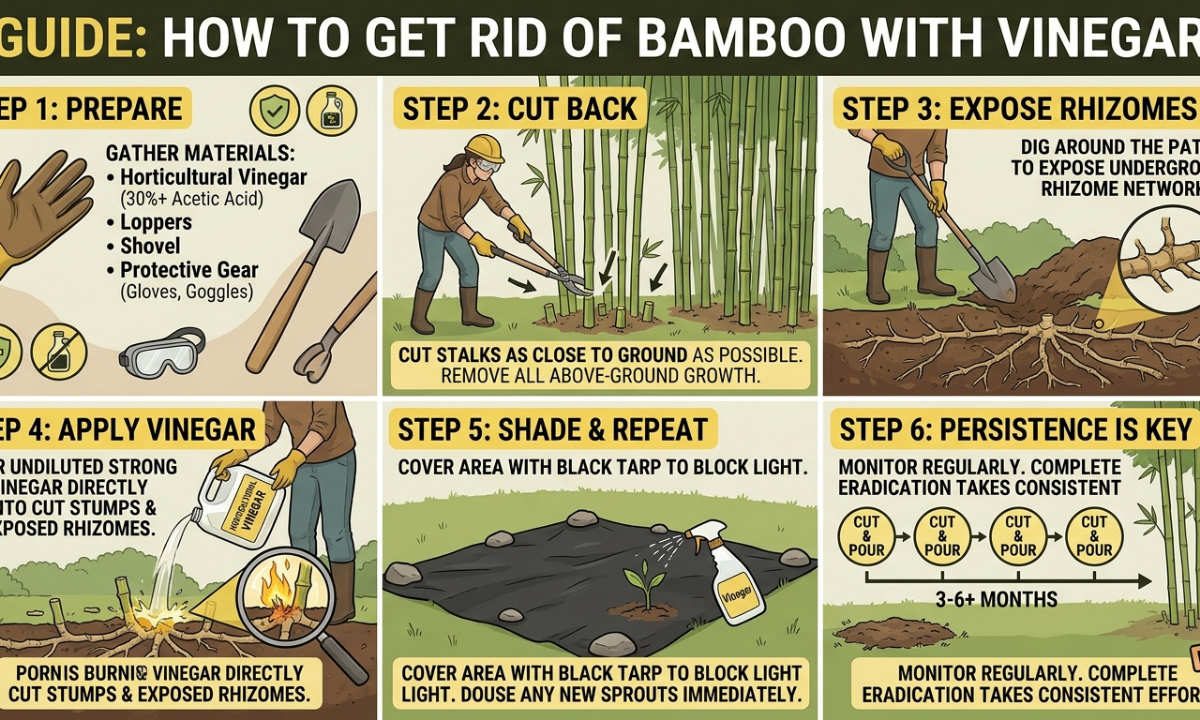
How to Get Rid of Bamboo With Vinegar
Before beginning, gather suitable cutting and digging tools. Depending on the size of the bamboo, you may need loppers, a pruning saw, a shovel, or stronger digging equipment. If you are considering an acetic-acid herbicide, use a registered product and follow its label.
Cutting Bamboo Down to the Ground
Start by removing as much above-ground growth as practical. Cutting the culms makes the area easier to inspect and allows you to identify new shoots as they appear. Repeatedly removing foliage can gradually weaken bamboo because the plant must use stored energy to produce replacement growth. However, this approach requires consistency.
Applying Vinegar to Fresh Growth
If vinegar or an acetic-acid product is used, remember that its action depends on direct contact with plant tissue. It is not a reliable method for sending a treatment down into bamboo’s rhizomes. Household vinegar is generally around 5% acetic acid, and Illinois Extension states that this concentration is not a good herbicide except against very small weed seedlings.
Repeating the Treatment
One treatment should not be expected to eliminate established bamboo. New shoots can continue emerging from surviving rhizomes. Regularly removing new growth is more important than repeatedly relying on a single vinegar application. The objective is to prevent the plant from rebuilding its above-ground growth and replenishing its energy reserves.
Monitoring for New Bamboo Shoots
Check the area frequently for new shoots. Pay particular attention to the edges of the former bamboo patch because running rhizomes can travel away from the original colony. Removing new shoots while they are young makes ongoing control easier and prevents them from developing into mature culms.
What Type of Vinegar Is Best for Bamboo?
Regular White Vinegar
Household white vinegar typically contains about 5% acetic acid. According to Illinois Extension, this concentration is generally too weak to be considered an effective herbicide for established plants. Therefore, it would be misleading to promise readers that ordinary kitchen vinegar will permanently kill established bamboo.
Stronger Vinegar Solutions
Commercial herbicidal vinegar products contain higher concentrations of acetic acid. Illinois Extension reports that products in the 10% to 20% range can provide effective control of certain weeds, particularly young plants. However, stronger acetic acid is not automatically a solution for How to Get Rid of Bamboo With Vinegar. Established bamboo has underground rhizomes that can survive damage to the foliage.
Why Vinegar Concentration Matters
Concentration affects how strongly acetic acid damages contacted plant tissue. Higher concentrations can provide stronger contact activity, but they also increase safety concerns. Illinois Extension warns that acetic acid concentrations above 11% can cause serious skin and eye injuries. Always follow the product label and use the required protective equipment.
Step-by-Step Bamboo Removal Process
Step 1: Identify the Bamboo Growth
First, determine whether you have running or clumping bamboo. Running bamboo requires particular attention because its rhizomes can spread extensively. Also inspect the surrounding area for shoots that may have emerged outside the original planting zone.
Step 2: Cut the Bamboo Stems
Cut mature culms close to ground level using an appropriate cutting tool. Removing the stems clears the area and makes future regrowth easier to spot. Young spring shoots can sometimes be knocked down or cut, while older, tougher culms may require loppers or a saw.
Step 3: Apply the Vinegar Treatment
If you choose to use an acetic-acid product, follow its label precisely. Keep the treatment away from plants you want to preserve. Most importantly, understand that contact damage to the leaves does not mean the underground rhizomes have been eliminated.
Step 4: Remove New Shoots
Continue removing shoots as they appear. Repeated foliage removal can eventually weaken bamboo by reducing its ability to photosynthesize and replenish underground energy reserves.
Step 5: Monitor the Area
Do not stop monitoring simply because the bamboo looks dead. New shoots can emerge later from rhizomes that remain underground. If regrowth continues, consider physically removing the remaining rhizomes rather than relying on vinegar alone.
Safety Tips When Using Vinegar
Protecting Nearby Plants
Acetic acid is not selective. It can injure desirable plants if their leaves or other tissues are contacted. Apply any herbicidal product carefully and avoid windy conditions that could cause spray to drift onto nearby vegetation.
Protecting Yourself During Application
Natural does not automatically mean harmless. Strong acetic-acid products can cause serious burns and eye injuries. Illinois Extension specifically warns about the risks associated with higher concentrations. Wear the protective equipment listed on the product label, particularly gloves and appropriate eye protection.
Avoiding Excessive Soil Exposure
Avoid applying acetic acid broadly when targeted treatment is possible. Vinegar-based herbicides can affect soil microorganisms and soil pH, although Illinois Extension notes that these effects are often short-lived. Use products only according to their legal label directions.
Why Vinegar Alone May Not Work
Bamboo Rhizomes Can Survive Underground
The underground rhizome network is the biggest obstacle to complete bamboo removal. Even when the above-ground plant disappears, surviving rhizome fragments can produce new shoots.
Established Bamboo Is Difficult to Control
Established running bamboo can be extremely persistent. The University of Maryland Extension identifies rhizome removal as the fastest and most effective physical method, although it can be disruptive and labor-intensive. For smaller infestations, repeated cutting may be more practical, particularly where digging could damage desirable plants.
Signs of Bamboo Regrowth
Fresh shoots are the clearest sign that bamboo remains active. New shoots appearing outside the original clump can indicate that underground rhizomes have spread. Treat every new shoot as a signal to continue the removal process rather than assuming the problem has disappeared.
Alternative Ways to Remove Bamboo
Digging Out Bamboo Rhizomes
Physical rhizome removal directly targets the underground structures responsible for spreading and regrowth. The University of Maryland Extension describes rhizome removal as the fastest and most effective physical approach, although it can require considerable effort and may disturb the surrounding landscape.
Repeatedly Cutting New Growth
Repeated cutting can be useful when digging is impractical. The goal is to continually remove foliage so the bamboo gradually exhausts its stored energy. This method requires patience and thoroughness because missed shoots can continue feeding the underground system.
Smothering Bamboo With a Cover
Covering unwanted vegetation can be considered as part of a broader physical-control strategy, but it should not be presented as an instant bamboo cure. Any method that leaves underground rhizomes untouched requires follow-up monitoring for shoots that emerge around or beyond the treated area.
Combining Natural Removal Methods
For difficult infestations, combining several non-chemical methods can make more sense than depending on vinegar alone. Cutting, digging, removing new shoots, and monitoring can work together. For extensive colonies, professional excavation may be the most practical option.
How to Prevent Bamboo From Growing Back
Removing Remaining Rhizomes
When eradication is the goal, remove as much of the rhizome system as possible. The University of Maryland Extension warns that missed rhizome fragments can resprout.
Installing Root Barriers
Rhizome barriers can help contain running bamboo. The University of Maryland Extension recommends barriers installed vertically around the colony, with part of the barrier left above ground so emerging rhizomes can be detected. Barriers must be monitored because gaps, damaged seams, or soil buildup can allow rhizomes to escape.
Checking for New Shoots
Regular inspection is essential. Remove new shoots before they mature and become more difficult to control. Spring is particularly important because this is when new culms emerge in a concentrated growth period.
Regularly Monitoring the Area
Bamboo control is a long-term process. Continue checking the area after the main colony has been removed. Persistence is especially important when even a small number of rhizome fragments remain underground.
Common Mistakes to Avoid
Removing the visible canes without addressing the rhizomes often results in regrowth. Always consider what is happening underground.
Expecting Immediate Results
How to Get Rid of Bamboo With Vinegar can survive for some time using stored energy in its underground structures. Repeated management is often necessary.
Damaging Nearby Plants
Vinegar and acetic-acid herbicides can damage desirable vegetation. Keep applications targeted and protect plants you want to keep.
Stopping the Process Too Early
A bamboo patch that looks clear may still contain living rhizomes. Continue checking for new shoots until you are confident that regrowth has stopped.
Final Thoughts
Learning How to Get Rid of Bamboo With Vinegar starts with understanding that vinegar is not a guaranteed solution for established bamboo. While acetic acid can damage the plant tissue it contacts, bamboo may continue growing from underground rhizomes. For this reason, successful removal usually requires patience and repeated control.
Cutting bamboo, removing new shoots, and physically removing remaining rhizomes can provide more reliable long-term results. If you choose to use an acetic-acid product, always follow its label instructions and protect nearby plants.
FAQs
Does Vinegar Really Kill Bamboo?
Vinegar can damage bamboo leaves and exposed plant tissue, but it may not kill established bamboo completely. The underground rhizomes can survive and produce new shoots.
How Does Vinegar Help Get Rid of Bamboo?
Vinegar contains acetic acid, which can damage plant tissue on contact. For How to Get Rid of Bamboo With Vinegar, it should be viewed as a limited control method rather than a guaranteed solution.
Will Vinegar Kill Bamboo Roots?
Ordinary vinegar should not be relied upon to kill bamboo roots or underground rhizomes. Physical removal and repeated cutting may be needed for established bamboo.
How Long Does It Take to Get Rid of Bamboo With Vinegar?
There is no fixed timeline because established bamboo can regrow from underground rhizomes. Regular monitoring and repeated removal may be necessary.
What Is the Best Way to Get Rid of Bamboo With Vinegar?
Vinegar alone may not provide complete bamboo removal. A combination of cutting, removing new shoots, and physically removing rhizomes is generally more reliable.
