
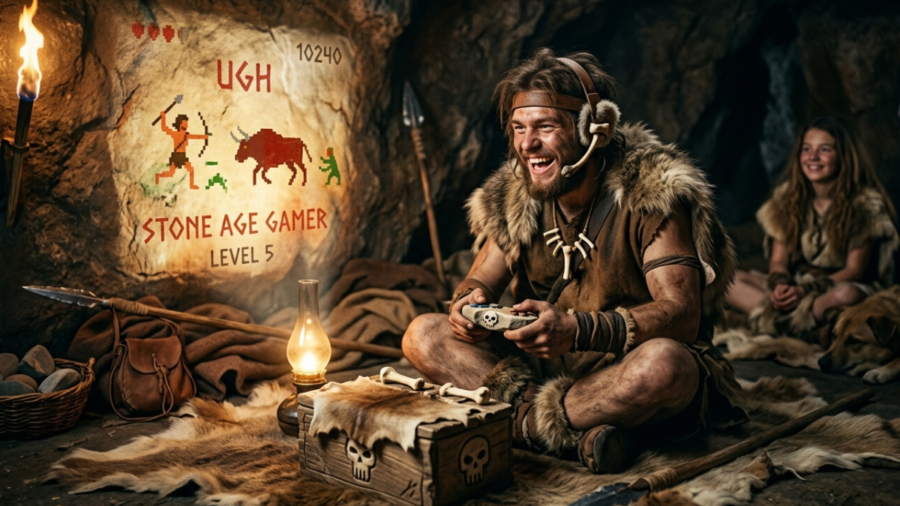
The phrase Stone Age Gamer can describe someone who has a strong interest in classic and retro video games. It brings to mind older consoles, arcade machines, cartridges, simple controllers, pixel art, and games from earlier generations.
Although it is not an official gaming category, it is a useful way to describe people who enjoy gaming history and older gaming experiences. Retro gaming is about more than playing old titles. It can involve collecting consoles, restoring hardware, revisiting childhood favorites, discovering classic game design, and sharing gaming memories.
What Is a Stone Age Gamer?
A Stone Age Gamer can be understood as a person who enjoys older generations of video games and gaming hardware. This may include classic consoles, arcade games, cartridges, physical game collections, and older handheld systems.
The term is informal rather than an official classification. Someone does not need to own dozens of vintage consoles to fit the description. Simply having a strong interest in classic gaming can be enough.
What Makes Someone a Stone Age Gamer?
There is no specific age or console requirement. A person who grew up playing an Atari or NES may love retro gaming, but so can someone who discovers those systems for the first time today.
Stone Age Gamers may collect original games, play classic titles, restore old hardware, visit arcades, or enjoy the design of older games. Some prefer original hardware, while others use modern systems that provide access to classic titles.
Stone Age Gamer and Retro Gaming
It and retro gaming are closely related. Retro gaming is the broader hobby of playing, collecting, preserving, and studying older games and systems. The it idea simply gives this interest a fun identity. It celebrates earlier generations without claiming that older games are automatically better than modern ones.
The History Behind Stone Age Gaming
The Early Days of Video Games
The history of video games began with experimental electronic and computer-based projects. In the 1950s, developers created early demonstrations that showed how computers could be used for interactive entertainment.
William Higinbotham created Tennis for Two in 1958, while Ralph Baer’s later work helped lead toward home video gaming. The Magnavox Odyssey, released in 1972, became an important early home console.
The Rise of Arcade Gaming
Arcade gaming helped transform video games into popular entertainment. Atari was founded in 1972, and its Pong became one of the best-known early arcade games. Arcades also created a social gaming culture. Players gathered around machines, competed for high scores, watched other people play, and returned repeatedly to improve their performance.
The Beginning of Home Consoles
Home consoles allowed people to enjoy video games without visiting an arcade. One of the most important developments was the use of interchangeable cartridges. The Atari VCS, later called the Atari 2600, launched in 1977 and allowed players to use different game cartridges with the same console. This helped establish the idea of building a home game library.
How Early Gaming Shaped the Industry
Early gaming introduced ideas that remain important today, including competitive scoring, home entertainment, multiplayer experiences, and game collections. The industry also experienced serious problems.
A large number of consoles and games entered the market in the early 1980s, contributing to the North American video game crash. Nintendo’s NES later helped revive the home-console market after its North American launch in 1985.
Classic Consoles Loved by Stone Age Gamers
Atari played an important role in both arcade and home gaming. The Atari 2600 helped popularize cartridge-based console gaming and gave players access to multiple games on one system. Its straightforward controls and simple graphics represent an important stage in gaming history.
Nintendo and Its Classic Systems
Nintendo became one of the most influential names in gaming. The NES arrived in North America in 1985 and became a major success. Games such as Super Mario Bros. helped establish platform gaming as a major genre. Nintendo later expanded its reach with systems such as the Game Boy and Super NES.
Sega and the 16-Bit Generation
Sega became one of Nintendo’s strongest competitors during the 16-bit era. The Sega Genesis, known as the Mega Drive in other markets, became particularly successful. Sonic the Hedgehog became a defining Sega character and helped the company establish a distinctive identity based around fast-paced games and competition with Nintendo.
Early PlayStation and Other Iconic Consoles
The original PlayStation represented a major change in console gaming. Sony launched it in Japan in 1994, with North American and European releases following in 1995. The system used CDs and emphasized 3D graphics. Games such as Final Fantasy VII, Tekken, Crash Bandicoot, Ridge Racer, and WipEout became closely associated with the platform.
Popular Games Among Stone Age Gamers
Classic Arcade Games
Games such as Pong, Pac-Man, and Donkey Kong played important roles in arcade history. Their basic objectives made them easy to understand while their increasing difficulty encouraged repeated play.
Retro Platform Games
Platform games became one of the defining genres of classic console gaming. Super Mario Bros. is a famous example, with gameplay centered on movement, timing, enemies, power-ups, and level design.
Classic Role-Playing Games
Classic RPGs introduced players to character progression, exploration, larger fictional worlds, and long-form storytelling. These games demonstrated that video games could offer experiences lasting many hours.
Fighting and Racing Games
Fighting and racing games were especially suitable for arcades and local multiplayer. Players could quickly understand the basic objective and then spend time learning characters, controls, tracks, and strategies.
Adventure and Puzzle Games
Adventure and puzzle games offered a different type of challenge. Instead of relying mainly on speed, they encouraged players to explore, find clues, solve problems, and understand game mechanics.
Why Do People Love Stone Age Gaming?
The Power of Nostalgia
Nostalgia is a major reason people return to classic games. An old console, cartridge, sound effect, or controller can remind players of earlier periods of their lives. Research into retro-game nostalgia also shows that older games can create meaningful emotional responses, making their appeal about more than technology.
Simple but Challenging Gameplay
Technical limitations often encouraged older developers to focus strongly on core gameplay mechanics. As a result, some classic games have simple controls but demanding challenges. This makes them easy to learn while still giving experienced players reasons to improve.
Local Multiplayer Experiences
Before online multiplayer became widespread, many multiplayer games were played in the same room. Friends could sit together around one television and compete or cooperate. That social experience remains one of the appealing parts of classic gaming.
Collecting Classic Games and Consoles
Collecting is another important part of retro culture. Enthusiasts may collect cartridges, consoles, controllers, manuals, boxes, or gaming memorabilia. For many collectors, these items have personal and historical value beyond their monetary worth.
Stone Age Gamer vs Modern Gamer
Graphics and Visual Technology
Modern games can provide detailed environments, advanced lighting, realistic animation, and large worlds. Classic systems worked with much more limited hardware. Those limitations helped create recognizable styles such as pixel art, simple sprites, and 2D environments.
Gameplay and Game Design
Modern games can include huge worlds, online services, cinematic storytelling, and complex progression systems. Classic games often concentrated on a smaller number of core mechanics. Neither approach is automatically better. They reflect different technologies and design philosophies.
Controllers and Gaming Hardware
Classic controllers were generally straightforward, often using directional controls and a small number of buttons. Arcade machines commonly used joysticks and physical buttons. Their simplicity remains appealing because players can quickly understand the basic controls.
Offline Gaming vs Online Gaming
Classic gaming was largely an offline experience. Players usually played alone or with people physically nearby. Modern gaming has expanded through online multiplayer, digital distribution, cloud services, and connected communities, creating an experience very different from early console gaming.
The Culture of Stone Age Gamers
Retro Gaming Communities
Retro communities allow enthusiasts to discuss games, hardware, repairs, collections, and preservation. These communities also help younger players discover older systems.
Collecting Vintage Games
Collectors may focus on one console, manufacturer, genre, or generation. Some want complete boxed collections, while others simply collect games they personally enjoy.
Classic Gaming Events and Conventions
Retro gaming events allow people to play older systems, meet other enthusiasts, view collections, and learn about gaming history. These events help keep classic gaming visible in modern culture.
Sharing Gaming Memories Online
The internet has made it easy to share collection photos, gameplay videos, restoration projects, and memories. This allows people who never experienced classic consoles when they were new to learn directly from older generations of players.
How to Become a Stone Age Gamer Today
Choosing a Retro Console
Beginners can start by choosing a console or generation that interests them. Original hardware offers an authentic experience, while modern retro systems may provide greater convenience.
Finding Classic Games
Classic games can be found through physical collections, official re-releases, compilations, and other authorized options. Compatibility should always be checked before purchasing older hardware or games.
Building a Retro Gaming Collection
A collection does not need to be large. Starting with a few favorite games or one particular console can make the hobby easier and more affordable.
Maintaining Old Gaming Hardware
Older consoles require careful handling. Dust, worn cables, aging components, and damaged controllers can affect performance. Proper cleaning, careful storage, and responsible handling can help extend the life of vintage equipment.
How Retro Gaming Influences Modern Games
Classic Ideas in Modern Game Design
Modern developers continue to use ideas from earlier games, including platforming, power-ups, boss battles, score systems, exploration, and character progression. These concepts can now be combined with modern graphics and technology.
Remakes and Remasters
Remakes and remasters allow classic games to reach new audiences. They may introduce updated graphics, controls, sound, or additional features while retaining elements of the original experience.
Retro-Inspired Indie Games
Many independent developers deliberately use pixel art, side-scrolling gameplay, limited palettes, and arcade-style challenges. This proves that retro design remains an active creative style rather than simply a memory from the past.
The Continued Popularity of Pixel Art
Pixel art remains popular because it has a recognizable visual identity. Modern developers can choose the style even when they have access to far more powerful technology than classic consoles provided.
The Future of Stone Age Gaming
Why Retro Gaming Continues to Grow
Classic gaming remains relevant because older games offer distinctive gameplay and cultural value. Digital collections, re-releases, restoration projects, and retro-inspired games continue to introduce classic ideas to new audiences.
Digital Preservation of Classic Games
Preserving video games is important because old hardware, software, and physical media can become difficult to maintain. Museums and cultural institutions preserve important gaming artifacts as part of technological and cultural history.
New Generations Discovering Retro Games
Young players can discover classic gaming through family collections, museums, modern compilations, online communities, and retro-inspired games. This allows gaming history to move from one generation to another.
Will Classic Gaming Ever Disappear?
Classic gaming is unlikely to disappear completely. Individual consoles and physical games may become harder to maintain, but their ideas can survive through preservation, collections, re-releases, museums, and modern games influenced by older designs.
Final Thoughts
The Stone Age Gamer represents a lasting appreciation for classic video games, vintage consoles, arcade experiences, and the gaming culture that shaped earlier generations. From Atari and Nintendo to Sega and the original PlayStation, these systems introduced ideas that continue to influence modern gaming.
For many players, being a it is not simply about playing old games. It is about enjoying their unique gameplay, remembering gaming history, collecting classic hardware, and discovering why these titles remain enjoyable decades later.
FAQs
1. What is a Stone Age Gamer?
Ans: A it is someone who enjoys classic and retro video games, older consoles, arcade games, and vintage gaming hardware.
2. What consoles do Stone Age Gamers usually enjoy?
Ans: A it may enjoy systems such as the Atari 2600, NES, Sega Genesis, Super NES, Game Boy, and original PlayStation.
3. Why do people become Stone Age Gamers?
Ans: Many it’s enjoy nostalgia, simple gameplay, classic game design, physical collections, and the history of early video games.
4. Is Stone Age Gamer an official gaming category?
Ans: No, It is not an official gaming classification. It is an informal phrase that can describe people who enjoy retro and classic gaming.
5. Can beginners become Stone Age Gamers?
Ans: Yes. Anyone can become a it by exploring classic games, learning about vintage consoles, and building a retro gaming collection.